
Online education has transformed significantly over the past decade. What began as simple video lectures and downloadable study materials has evolved into structured learning platforms used by millions of students worldwide. Universities, private institutions, and independent educators now rely on digital platforms to deliver courses across disciplines, making education more accessible than ever before.
However, early online learning systems often lacked personalization, real-time feedback, and meaningful interaction. Many platforms followed a one-size-fits-all approach, where every learner consumed the same content regardless of individual pace, strengths, or weaknesses. As enrollment numbers increased, the need for more adaptive, responsive, and data-driven systems became clear.
This is where artificial intelligence has begun to play a transformative role. By integrating machine learning, natural language processing, and predictive analytics, AI is reshaping how online education platforms operate. From personalized learning paths to automated assessments and intelligent tutoring systems, AI is moving digital education beyond static content delivery toward dynamic, student-centered experiences.
Understanding how AI is revolutionizing online education platforms requires examining both its practical applications and its broader implications for learners, educators, and institutions.
The Evolution of Online Education Platforms
The development of online education platforms has moved through several distinct phases. In the early stages, digital learning was primarily an extension of traditional classrooms. Institutions uploaded lecture recordings, PDF notes, and basic quizzes onto learning management systems. These platforms functioned largely as content repositories rather than interactive learning environments.
As internet access expanded and broadband speeds improved, online education began incorporating video-based instruction and discussion forums. Massive Open Online Courses, commonly known as MOOCs, emerged as scalable models capable of reaching thousands of learners simultaneously. While this marked a significant shift toward accessibility, interaction remained limited. Feedback was often delayed, and course progression rarely adapted to individual performance levels.
A key limitation of early online systems was their static design. Every student followed the same learning sequence, completed identical assignments, and received uniform assessments. This model did not account for differences in learning speed, prior knowledge, or preferred study styles. As enrollment numbers increased globally, the need for more responsive and data-driven platforms became increasingly evident.
Educational institutions and technology developers began exploring ways to make digital learning more adaptive. The integration of analytics tools allowed platforms to track user behavior, course completion rates, and engagement metrics. However, analytics alone could not actively adjust the learning experience in real time.
The introduction of artificial intelligence marked a turning point. Instead of merely tracking student performance, AI-enabled systems could analyze patterns, predict learning outcomes, and personalize content delivery. This shift transformed online education platforms from passive distribution systems into intelligent environments capable of adapting to individual learners.
What Is AI in Online Education?
Artificial intelligence in online education refers to the use of advanced computational systems that simulate aspects of human intelligence to enhance learning experiences. These systems rely on technologies such as machine learning, natural language processing, and predictive analytics to analyze data and make informed decisions.
Machine learning enables platforms to recognize patterns in student behavior. For example, if a learner repeatedly struggles with specific concepts, the system can identify this pattern and adjust content recommendations accordingly. Over time, the system becomes more refined in predicting learning needs.
Natural language processing allows AI systems to interpret and respond to human language. This technology powers chatbots, automated feedback tools, and virtual teaching assistants that can answer questions or provide explanations in real time.
Predictive analytics plays a crucial role in identifying trends within large student populations. By analyzing engagement data, completion rates, and assessment performance, AI systems can predict which students may be at risk of falling behind.
Unlike traditional rule-based software, AI-powered systems continuously learn and adapt based on new data inputs. This adaptability enables online education platforms to move beyond standardized content delivery toward personalized and responsive learning environments.
The integration of AI does not replace educational frameworks but enhances their efficiency and responsiveness. It transforms online platforms into dynamic systems capable of supporting diverse learners at scale.
How AI Is Transforming Online Education Platforms
Artificial intelligence is not merely an added feature in modern digital classrooms. It is increasingly embedded into the core architecture of online education platforms. Its impact can be observed across personalization, assessment, engagement, and student retention.
Personalized Learning Paths
One of the most significant contributions of AI is the development of personalized learning pathways. Traditional online courses often require all students to follow a fixed sequence of modules. AI-driven systems, however, analyze individual performance data and adapt content accordingly.
For example, if a student demonstrates strong understanding of foundational concepts but struggles with advanced applications, the platform can automatically recommend additional practice exercises or alternative explanations. Conversely, high-performing learners can progress more quickly without being restricted by standardized pacing.
This adaptive model acknowledges that learners differ in background knowledge, learning speed, and comprehension style. By tailoring content delivery, AI improves efficiency and reduces frustration associated with overly rigid structures.
Intelligent Tutoring Systems
AI-powered tutoring systems provide real-time academic assistance. These systems can answer questions, clarify doubts, and guide learners through complex problems at any time of day. Unlike traditional support systems that depend on instructor availability, intelligent tutors operate continuously.
Such systems rely on natural language processing to interpret student queries and provide relevant responses. While not a replacement for human educators, they serve as supplementary support, particularly in large-scale courses where individual attention may be limited.
The availability of continuous assistance enhances learner confidence and reduces dependency on scheduled office hours.
Automated Assessment and Feedback
Assessment is another area where AI is significantly influencing online education. Automated grading systems can evaluate multiple-choice tests, short answers, and even certain types of essays within seconds. This immediate feedback enables students to identify mistakes and improve performance without waiting for manual evaluation.
Beyond grading, AI analyzes response patterns to detect recurring errors or conceptual misunderstandings. Instructors can use this data to refine teaching strategies or adjust course content.
By reducing administrative workload, automated assessment systems allow educators to focus more on mentoring, discussion, and curriculum design.
Predictive Analytics and Student Retention
Online courses often experience high dropout rates. AI-powered predictive analytics can analyze engagement data, login frequency, assignment submissions, and assessment performance to identify students at risk of disengagement.
Early detection allows institutions to intervene through reminders, support sessions, or targeted resources. This proactive approach improves retention rates and enhances overall learning outcomes.
Predictive systems also help institutions understand broader learning patterns, enabling data-informed decisions about course structure and support mechanisms.
Content Recommendation Engines
Similar to recommendation systems used in streaming platforms, AI in education can suggest relevant courses, modules, or supplementary materials based on a learner’s progress and interests.
For instance, a student completing a programming course may receive recommendations for advanced coding modules or related certifications. These recommendations support continuous learning and skill progression.
Through these interconnected applications, AI transforms online education platforms from static repositories into adaptive, data-driven learning ecosystems.
Benefits of AI in Online Education
The integration of AI into online education platforms offers several measurable advantages for learners and institutions.
First, personalization enhances engagement. Students are more likely to remain motivated when learning materials match their skill levels and progress patterns. Adaptive systems reduce unnecessary repetition while providing targeted support where needed.
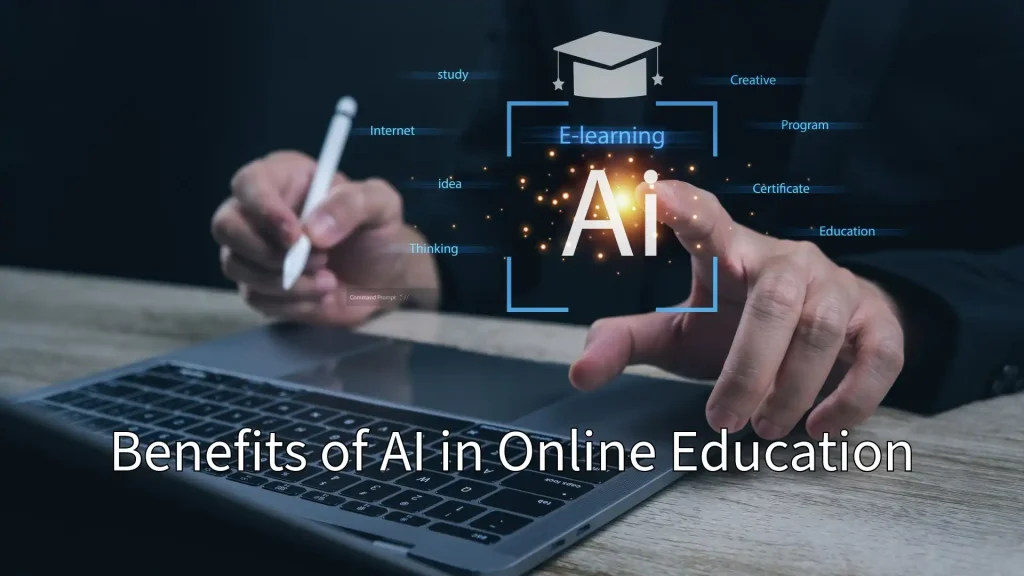
Second, accessibility improves significantly. AI tools such as automated transcription, language translation, and speech recognition assist learners with diverse needs. Students from different linguistic or educational backgrounds can engage more effectively with course content.
Third, data-driven insights enable educators to make informed decisions. Analytics dashboards highlight trends in student performance, allowing instructors to refine content and address widespread difficulties.
Cost efficiency is another benefit. Automated grading and virtual support systems reduce administrative burdens, particularly in large enrollment courses. Institutions can scale programs without proportionally increasing staff resources.
Finally, scalability ensures broader access. AI-powered platforms can serve thousands of learners simultaneously while maintaining individualized support mechanisms. This capacity expands educational opportunities beyond geographical and institutional limitations.
While these advantages are substantial, they must be considered alongside operational and ethical challenges.
Read More from Educational Technology
Challenges and Ethical Concerns
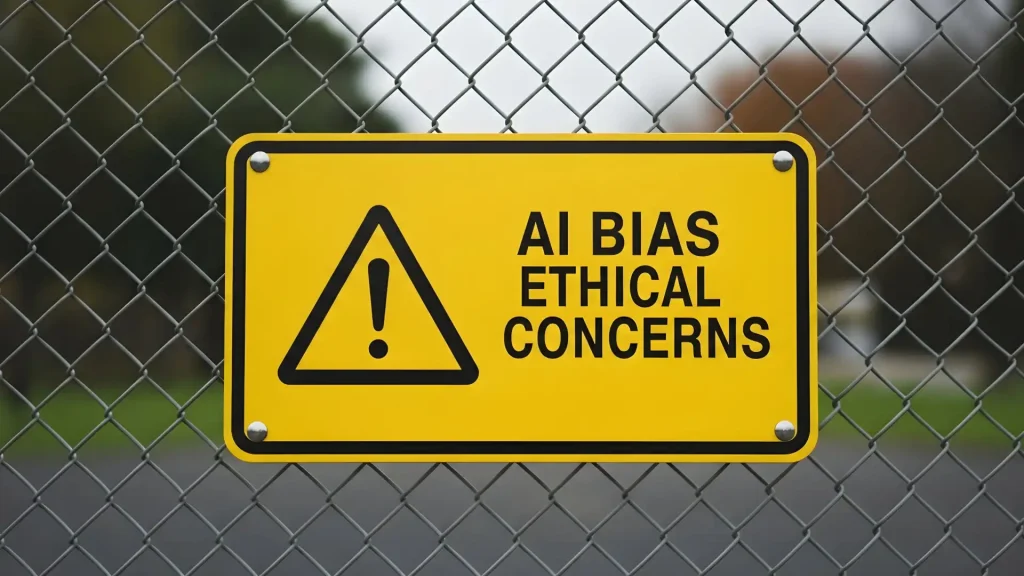
Despite its transformative potential, the use of AI in online education raises important concerns.
Data privacy is a central issue. AI systems rely on extensive student data, including performance metrics and behavioral patterns. Ensuring secure storage and responsible data use is essential to protect learner rights.
Algorithmic bias presents another challenge. If AI systems are trained on incomplete or skewed data, they may inadvertently reinforce inequalities. For example, predictive models could misinterpret learning patterns from diverse demographic groups.
Over-reliance on automation may also reduce meaningful human interaction. Education involves mentorship, emotional support, and contextual understanding, elements that AI cannot fully replicate.
Concerns about teacher displacement have emerged as well. While AI can automate certain administrative tasks, the role of educators remains critical for critical thinking development and holistic guidance.
Finally, the digital divide limits access to AI-enhanced platforms. Students without reliable internet connectivity or modern devices may not fully benefit from these technological advancements.
Addressing these challenges requires balanced implementation strategies that prioritize transparency, fairness, and human oversight.
AI vs Traditional Online Learning Systems
To understand the depth of transformation, it is helpful to compare AI-powered platforms with traditional online learning systems.
| Feature | Traditional Online Platform | AI-Powered Platform |
|---|---|---|
| Personalization | Same content for all learners | Adaptive content based on performance |
| Feedback Speed | Delayed, instructor-dependent | Instant automated feedback |
| Student Tracking | Basic progress tracking | Predictive analytics and risk detection |
| Engagement | Video lectures and quizzes | Interactive and adaptive modules |
| Support | Limited office hours or email | 24/7 AI-assisted tutoring |
Traditional learning management systems primarily function as content delivery tools. They host lectures, assignments, and discussion boards but do not actively modify learning experiences based on individual performance.
AI-powered platforms, in contrast, continuously analyze student interactions. They adjust difficulty levels, recommend resources, and provide automated feedback in real time. This shift from static to responsive design represents a major structural change in how digital education operates.
However, traditional systems still provide foundational organization and structured curriculum delivery. AI enhances rather than replaces these core frameworks.
Real-World Applications of AI in Education Platforms
AI integration is already visible across multiple areas of digital education.
AI-based exam proctoring systems monitor student behavior during online assessments to detect irregular activity. These systems analyze facial recognition, eye movement, and browser activity to maintain academic integrity.
Language learning platforms use AI-driven speech recognition to evaluate pronunciation and fluency. Learners receive immediate corrections and targeted exercises based on their performance patterns.
Skill assessment platforms employ adaptive testing models. Instead of fixed question sequences, difficulty levels adjust dynamically depending on previous responses, offering a more accurate measure of proficiency.
Some platforms also use AI for career pathway recommendations. Based on completed courses and performance data, systems can suggest potential job roles, certifications, or advanced training opportunities.
These applications demonstrate that AI is not theoretical within online education. It is already operational in assessment, tutoring, engagement tracking, and career guidance.
Is AI Replacing Teachers?
A common concern surrounding AI in education is whether it will replace human educators. While automation can handle grading, basic tutoring, and data analysis, education extends beyond information delivery.
Teachers play critical roles in fostering critical thinking, ethical reasoning, creativity, and emotional support. AI systems can provide structured guidance but cannot replicate human empathy, contextual understanding, or mentorship.

In practice, AI functions as an augmentation tool rather than a replacement. By reducing administrative tasks and offering analytical insights, AI enables educators to focus more on meaningful interaction and curriculum refinement.
The future of education is likely to involve collaboration between human instructors and intelligent systems, rather than substitution.
The Future of AI in Online Education
As AI technology advances, online education platforms are expected to become increasingly adaptive and immersive.
Hyper-personalization may allow systems to design fully customized learning journeys based on cognitive patterns and behavioral analytics. AI mentors could simulate conversational learning experiences tailored to individual goals.
Virtual classrooms integrated with AI may support multilingual communication, real-time translation, and intelligent moderation of discussions. Global access to education could expand as adaptive systems bridge linguistic and regional barriers.
At the same time, regulatory frameworks and ethical standards will likely evolve to address concerns around data use, transparency, and fairness.
The long-term trajectory suggests that AI will not simply enhance online education platforms but fundamentally reshape how digital learning ecosystems are designed and delivered.
Frequently Asked Questions
How is AI used in online education platforms?
AI is used to personalize learning paths, automate assessments, provide intelligent tutoring, analyze student data, and recommend relevant courses. It enhances engagement and improves learning efficiency through adaptive systems.
Can AI improve student performance in online courses?
AI can support improved performance by identifying weak areas, providing instant feedback, and recommending targeted practice. However, outcomes still depend on student motivation, consistency, and course quality.
Is AI in online education safe?
AI systems are generally safe when implemented with proper data protection measures. Institutions must ensure transparent data policies and secure storage to protect student information.
Will AI replace online teachers?
AI is unlikely to replace teachers entirely. While it can automate grading and provide supplementary support, human educators remain essential for mentorship, complex explanation, and critical thinking development.
Are AI-powered courses better than traditional online courses?
AI-powered courses offer enhanced personalization and real-time feedback. However, effectiveness depends on course design, instructional quality, and how responsibly AI tools are integrated.
Conclusion
Artificial intelligence is fundamentally reshaping how online education platforms operate. From personalized learning pathways and automated assessments to predictive analytics and intelligent tutoring systems, AI introduces a level of responsiveness that traditional digital classrooms lacked.
The transformation lies not merely in automation but in adaptability. AI enables platforms to move beyond static content delivery and toward data-driven, learner-centered environments. Students benefit from targeted support, educators gain actionable insights, and institutions can scale programs more efficiently.
At the same time, challenges related to data privacy, algorithmic bias, and equitable access must be addressed responsibly. AI should be viewed as an enhancement tool rather than a replacement for human instruction.
As technology continues to evolve, the integration of AI into online education platforms is likely to deepen. Its long-term impact will depend on how effectively educational institutions balance innovation with ethical oversight, ensuring that digital learning remains inclusive, transparent, and centered on meaningful educational outcomes.
About The Author
