

Germany remains one of the world’s most attractive study destinations for international students who wants to Study in Germany: low or no tuition at public universities, high-quality research and teaching, abundant English-taught programs, strong industry linkages, and clear post-study work routes. This guide walks you step-by-step through admissions (bachelor’s & master’s), language and test requirements, the visa/blocked-account proof, scholarships (including DAAD), arrival & living cost realities, and how to stay and work after graduation.
Quick snapshot about Study in Germany
- Who can apply & how to pick a program
- Application routes (Uni-Assist, Hochschulstart, direct)
- Language & test requirements (TestDaF, DSH, IELTS/TOEFL)
- Proof of funds / blocked account amount and alternatives
- Visa timeline and key documents (student visa → post-study permit)
- Scholarships: DAAD, university & country options
- Cost breakdown, housing, health insurance, work rules
- Post-study job search & pathways to residency (18-month rule)
1. Which program should you pick — the basics

- Bachelor’s (undergraduate): Programs in German or English; many public universities require proof of German for German-taught programs and higher secondary qualifications recognized by the university. Some applicants need a Studienkolleg (foundation course) depending on the school leaving certificate.
- Master’s (postgraduate): Often specialized and frequently available in English. Most require a recognized bachelor’s in a related field, transcripts, CV, motivation letter/SOP, reference letters, and sometimes a portfolio or work experience.
Tip: Filter programs by language of instruction, intake (winter/summer), application portal (uni-assist vs university direct vs hochschulstart for some restricted subjects), deadlines, and scholarship eligibility.
2. How to apply — the three common routes
A. Uni-Assist (used by many universities)
Uni-Assist evaluates international documents for roughly 180 German universities. You upload your documents, pay the evaluation fee and, after a positive verdict, uni-Assist forwards your application to the universities you chose. Check processing times and plan early.
B. Hochschulstart (DoSV / central service)
Some restricted subjects (medical, pharmacy, teacher training, etc.) use the DoSV system via hochschulstart.de. If your course is listed there, you must register and follow DoSV rules.
C. Direct application (university portal)
Many universities accept direct applications (especially for master’s and English-taught programs). Always follow the specific university checklist.
Timeline rule: Start 9–12 months before your intended intake (especially if you need APS, translations, certificates, or a student visa).
3. Important document checklist (what universities & embassies ask)

- Passport (valid 2+ years)
- Academic transcripts & degree certificates (certified translations if not in German/English)
- Curriculum Vitae (EU style)
- Statement of Purpose / Motivation Letter
- Letters of Recommendation (1–2)
- Language proficiency: German or English certificates (see next section)
- Proof of funds for visa (blocked account / scholarship letter / bank guarantee)
- Passport photos, CV and ID copies
- APS certificate (for many Indian applicants) — read next.
4. APS certificate — India-specific (very important)
If you studied in India, APS (Akademische Prüfstelle / Academic Evaluation Centre) verification is frequently required to authenticate Indian degrees and is often a prerequisite for the German student visa and some university admissions. APS India verifies academic records and issues a certificate that many German missions expect. It’s wise to apply early because APS processing can take time.
5. Language & test requirements (which test for which program)
German-taught programs to study in Germany
- TestDaF (Test of German as a Foreign Language) — many universities expect TestDaF level 4 in each section for degree programs.
- DSH (German university language exam) — DSH-2 or above is often required.
- Goethe-Zertifikat B2/C1 accepted by many institutions.
English-taught programs to study in Germany
- IELTS (commonly 6.0–6.5 for master’s; some programs require 6.5+)
- TOEFL iBT (scores vary, often 80+)
Always check the specific university page — some accept institutional waivers or previous degrees taught in English.
Know More about Proficiency Test: IELTS vs TOEFL: Which Is Better for Study Abroad?
6. Proof of funds — blocked account (and alternatives)
Germany requires international students to prove sufficient finances for the first year. From 1 January 2025, the commonly required amount for a blocked account is €11,904 per year (≈ €992 per month) — you deposit this in a blocked (Sperrkonto) and receive monthly disbursements after arrival. Alternatives can include scholarship award letters, parental income statements with bank guarantees, or blocked-account providers’ confirmations. Always confirm the exact requirement with the German mission in your country.
Providers: Fintiba, Expatrio and similar banks/processors offer blocked accounts and help with visa letters.
7. Student visa — essentials & timeline to Study in Germany
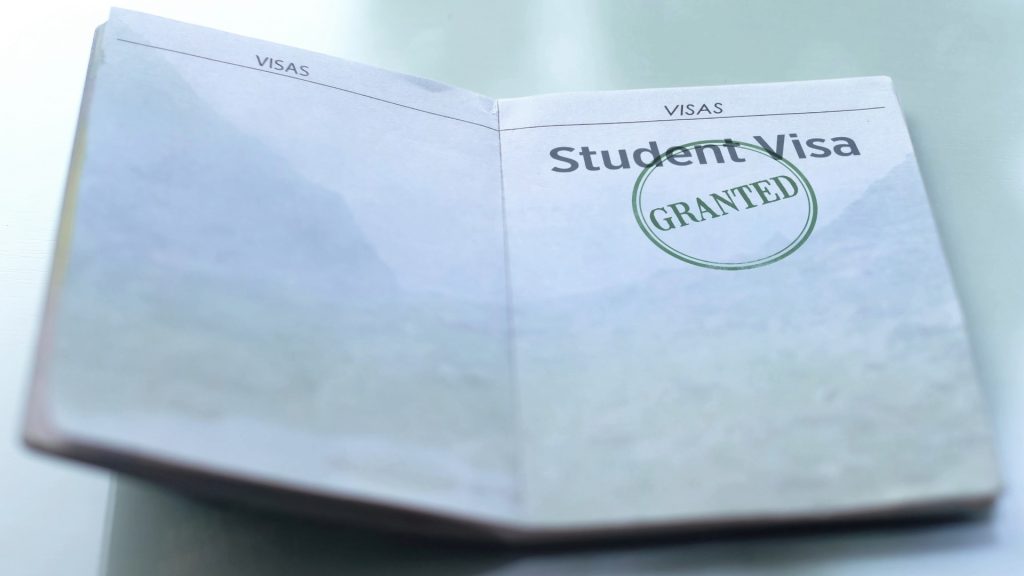
- Type: National (D-visa) for study (apply at the German embassy/consulate in your home country).
- Apply once you have: admission letter (or conditional admission), APS (if required), proof of funds (blocked account or scholarship), health insurance (coverage confirmation), passport, passport photos, visa application form and fees.
- Processing time: can take weeks to months — start early (at least 8–12 weeks recommended).
- Arrival & registration: after arrival you must register with local authorities (Anmeldung), obtain health insurance (if not already arranged), and complete enrolment at your university.
Official guidance on financing and visa procedures is available via Germany’s study portals and the embassy pages — always refer to the official site for the consulate in your country.
8. Scholarships (DAAD + others)

DAAD (German Academic Exchange Service)
DAAD offers many scholarships for master’s and PhD candidates across fields and countries. Application windows and eligibility vary; some DAAD scholarships include monthly stipends, travel allowances and health insurance. Look up discipline-specific DAAD calls and institutional scholarships early to study in Germany
University & external scholarships
- University scholarships (check the university’s international office)
- Erasmus Mundus (for joint programs)
- Foundations and country-specific scholarships (e.g., Konrad-Adenauer-Stiftung, Heinrich-Böll-Stiftung)
- Employer/co-sponsored schemes for postgraduate research
Pro tip: Even partial tuition or living-cost aid eases the blocked-account burden — always apply early and keep a neat record of scholarship paperwork for visa purposes.
9. Cost of living & part-time work
- Estimated living costs: the blocked-account figure (~€992/month) is a baseline that covers housing, food, insurance, transport and study materials. Cities differ: Berlin, Munich and Hamburg cost more than Leipzig or Magdeburg.
- Student jobs: students are allowed to work part-time (up to 120 full days or 240 half days per year without a work permit) — check visa rules. Part-time earnings help with pocket money but don’t replace proof of funds.
- Semester fees: public unis usually charge a small semester contribution (covers transit ticket, student services), rarely tuition for public institutions; some states have tuition for non-EU students — confirm with the university.
10. Health insurance & enrolment
Health insurance is mandatory. EU students use EHIC; non-EU students must enroll in a statutory student health insurance or approved private plan (usually ~€110/month for statutory student insurance). Universities will not allow enrolment without proof of insurance.
11. Arrival, enrolment & academic life
- Enrolment (Immatrikulation): bring original documents, passport, visa, proof of financing, health insurance to the university’s enrolment office.
- Orientation & semester structure: German academic year usually has a winter semester (Oct–Mar) and summer semester (Apr–Sep). Deadlines differ; winter intakes are larger.
- Credits: ECTS system; research and lab work are common for STEM programs; independent study and deadlines demand disciplined planning.
12. Staying after graduation — job search & residency
International graduates can apply for a residence permit for up to 18 months to look for work related to their qualifications. During this time you may take up employment to support yourself. Once you find a qualifying job, switching to a work permit or EU Blue Card is possible — a common route to long-term residency.
13. Common pitfalls & how to avoid them
- Late applications: don’t miss uni or visa deadlines. Start 9–12 months ahead.
- Wrong documents: submit certified translations where required, and follow uni-assist/uni checklist exactly.
- Underfunding: blocked account amount is non-negotiable for visa; partial evidence causes delays.
- Ignoring APS (India): Indian students must often get APS—do this early.
14. Practical timeline (sample — for winter intake Oct 2026)
To Study in Germany this is the timeline that is basically followed:
- Oct–Dec 2025: shortlist universities/programs, prepare documents, start APS (if India), schedule language tests.
- Jan–Mar 2026: apply via uni-assist/university portal, request recommendation letters, finalize SOP.
- Apr–Jun 2026: receive offers / conditional offers, apply for scholarships (DAAD deadlines vary).
- June–Aug 2026: arrange blocked account / proof of funds, apply for student visa at embassy/consulate.
- Sept–Oct 2026: travel, register, enrol, attend orientation.
15. Quick checklist before you apply
- Do you meet the academic prerequisites?
- Do you have language test scores or plan to get them in time?
- Have you started APS (if applicable)?
- Blocked account / scholarship confirmation ready?
- Passport validity (≥2 years) & visa appointment scheduled?
- Health insurance plan selected?
16. Useful official resources (bookmark these)
- DAAD (scholarships & study info) — DAAD official site.
- Uni-Assist (application processing) — uni-assist.de.
- Study in Germany / government resource (proof of finance & practical info).
- Make-it-in-Germany (post-study work & immigration info).
- APS India (document verification for Indian applicants).
FAQ (concise & SEO-friendly)
Q1. How much money do I need to open a blocked account to study in Germany in 2026?
From 1 Jan 2025 the commonly required amount is €11,904 per year (≈€992/month) for the visa proof of funds. Confirm with your local German mission.
Q2. Do Indian students need an APS certificate?
Yes, many Indian applicants must get an APS certificate (Academic Evaluation Centre) to verify academic credentials before visa/university applications. Check APS India guidance.
Q3. Can I study in Germany without German?
Yes. Many master’s programs are taught in English; bachelor’s programs often require German. Always check the language of instruction and the university’s language requirements.
Q4. Is there a scholarship that pays living costs while studying in Germany.
DAAD and some foundation scholarships cover monthly stipends and health insurance; competition is strong — apply early and carefully.
Q5. Can I work in Germany while studying?
Yes, limited part-time work is permitted (120 full days or 240 half days per year is the general rule). Check current visa rules and university career services.
Q6. Can I stay and work after graduating?
Yes, graduates may obtain an 18-month residence permit to look for employment related to their degree; once you secure a qualified job you can switch to a work permit or EU Blue Card.
Final tips (from seniors)
- Start early: paperwork, APS and blocked account take time.
- Keep copies & translations: certified translations avoid delays.
- Network & internships: internships often convert to jobs.
- Use university career services: they guide CVs, interviews and job fairs.
- Respect deadlines & follow official sources for visa/scholarships (DAAD, embassy, university).
About The Author
